Online tools to improve your English, German, French and Spanish.
Herramientas para mejorar su Alemán, Francés, Inglés, Español, Castellano. Diccionarios :
Diccionaries
- Academia
- Acronyms
- Agora
- AHK Deutsch
- Akademus (Uned)
- Antiplagio
- Biblioteca virtual (es)
- Britannica
- Calatayud Examenes
- Cambridge
- Cervantes
- Cliff Notes
- Collins
- Detector IA
- Dialnet
- Diccionario plurilingüe
- Duden
- english-idioms
- Freepick
- Idioms
- Intecca (uned)
- Longman
- Lyrics
- Oxford
- Pons
- Pons Alemán
- Proquest
- Proverbs
- Proverbs Oxford
- Quizlet
- Rae
- Redewendungen
- Refranes (es)
- Research Gate
- Sparknotes
- Synonyms
- Thesaurus
- UD
- Verificar plagio
- Videos
- Webster
- Wikipedia Deutsch
- Wikipedia English
- Wikipedia Française
- Wikipedia Spanish
- Wordreference
martes, 10 de febrero de 2026
lunes, 20 de octubre de 2025
Inglés del curso de acceso para mayores de 25 años a través del campus virtual de la UNED...
Los estudiantes acceden a la asignatura de inglés del curso de acceso para mayores de 25 años a través del campus virtual de la UNED, donde encontrarán material de estudio, foros y clases virtuales. El curso está diseñado para el estudio a distancia y el material de referencia es el libro de texto "Curso de Inglés para Adultos". Nos juntamos los lunes en clase o desde casa online de 10 h a 11:30 h por TEAMS de la UNED. William Konrad Prittwitz (Wilko) hace lo que puede para repasar con los alumnos adultos, técnicas de estudio y el uso del libro de clase, gramática básica, pronombres personales, ... INGLÉS PARA ADULTOS (UNED). Se trata de repasar los niveles A1-A2 para ir avanzando hacia los niveles más altos. Recomendamos 2 h para quienes no sepan nada de inglés, 1 h para los más avanzados. Tenemos este blog, una clase a la semana hasta mayo de 2026 los lunes para preguntas, el chat, video, el foro de nuestra clase de la UNED y el libro de clase.
APUNTAROS A ESTE BLOG SI OS GUSTA LA FILOLOGÍA ESPAÑOLA , ANGLOFONA GERMANA...
No dudéis en contactarme con dudas, preguntas...
salu2
WiL
miércoles, 1 de octubre de 2025
DEUTSCHSTUNDE MIT WILKO
HOLA
PARA MIS ALUMNOS NUEVOS DE ALEMÁN HE CREADO UN BLOG HACE YA AÑOS CON MIL COSAS QUE OS VA A GUSTAR SEGURO TIENE MUCHO TRABAJO Y PODÉIS ENCONTRAR EJERCICIOS BÁSICOS Y UN POCO MÁS AVANZADOS
https://deutschlernhilfe.blogspot.com/
HALLO
FÜR MEINE NEUEN DEUTSCHSCHÜLER HABE ICH VOR JAHREN SCHON EINEN BLOG MIT TAUSEND VERSCHIEDENEN DINGEN ERSTELLT, DIE EUCH SICHER GEFALLEN WERDEN. ICH BIN MIR SICHER, DASS VIEL ARBEIT DARIN STECKT, NICHT NUR VON MIR, SONDERN INSBESONDERE VON EUCH UND IHR EINFACHE UND AUCH ETWAS FORTGESCHRITTENE ÜBUNGEN FINDET.
https://deutschlernhilfe.blogspot.com/
viernes, 20 de junio de 2025
Words stolen from French
Espirit de la ´escalier \ess-preed-less-kah-lyay\
We’ve all been in a situation when we think of the perfect thing to say in response to something provocative or insulting, too late to say it at the moment. When the right words come, the right time is past. The French call this too-late inspiration l’esprit de l’escalierplay. Esprit is the root of our word spirit, but in French, it can also mean “wit,” so this phrase is translated literally as “wit of the staircase” and is used to mean repartee thought of too late, on the way home.
The expression was coined by Denis Diderot, the French philosopher of the 1700s, so we can imagine that the grand staircase of a château or manor is what he had in mind.
Outre \oo-TRAY\
When words are borrowed from other languages, the idea the word expresses somehow goes beyond the limits of the language that adopted the new word. In the case of outréplay, that’s also a clue as to the borrowed word’s meaning. Outré means “violating convention or propriety” or “bizarre.” It is used to describe things that are unusual, extravagant, or shocking in some way:
Because of this, there’s always been a sense of him being too outré for traditional outlets: too direct, too bumptious, too partial, too much.
— Miranda Sawyer, The Observer (London, Eng.), 23 Apr. 2022.
See more stolen French words from here: c.f. Merriam-webster
martes, 8 de abril de 2025
Drag
I always find it amusing -when in a classroom- to play with the student's mind, highlighting how a word can change its meaning by looking at grammar, semantics, semiotics, and etymology. For example, I like to start the class with word referencing and looking first at the nouns, verbs, and adjectives. In the case of drag, it has hundreds of connotations, denotations, exemptions, and more. From here DRAG
viernes, 7 de marzo de 2025
Eggcorns
According to Merriam-Webster, an eggcorn is “a word or phrase that sounds like and is mistakenly used in a seemingly logical or plausible way for another word or phrase.” One of the most common is “for all intensive purposes,” when the speaker really means “for all intents and purposes.
Here are some examples:
Audience "agreeance," a combination of agreement & acceptance “another thing coming" instead of “another think” (Though many say it’s the other way around and “another thing” is arguably more common now.)"scared" instead of “afraid ”“as dust fell” instead of “as dusk fell ”“biting my time" instead of “biding” "best thing since life's bread" instead of “sliced bread” “bond fire" instead of “bonfire” “buck naked" instead of “butt naked” (though some say it’s the other way around)"callapitter" instead of “caterpillar” "chesterdraws" instead of “chest of drawers”
"chicken
spots" instead of “chicken pox”"civilware" instead of
“silverware”"close-a-phobia" instead of
“claustrophobia”"consinct" instead of “concise”"curly
roads" instead of “curvy roads”"daring-do" instead of
“derring-do”"die-a-rear" instead of
“diarrhea”"doggy-dog-world" instead of “dog-eat-dog”"Duck
Tape" (a brand) instead of “duct tape”"escape goat" instead of
“scape goat”"expresso" instead of “espresso”"Extreme Court"
instead of “Supreme Court”"eyebulbs" instead of
“eyeballs”"Facetube" instead of “YouTube”"flush out"
instead of “flesh out”"flustrated" instead of
“frustrated”"flutterby" instead of “butterfly”"free
examples" instead of “free samples"gander up"(or “dandruff up”)
instead of “dander up”"genetic brands” instead of “generic brands”
etc.
domingo, 2 de marzo de 2025
Late night...
Late-Night Journaling
Unburden your mind and embrace peace—one word at a time.
C.f. The Midnight Journal
Mar 01, 2025
It’s late.
The world is quiet.
The distractions of the day have faded, and it’s just you, your thoughts, and the dim glow of a notebook waiting to be filled.
There’s something about the stillness of the night that makes everything feel more real, our emotions, our worries, and our dreams.
It’s when the mind finally speaks, no longer drowned out by emails, conversations, and daily noise.
And yet, so often, we let those thoughts swirl inside, keeping us restless instead of at peace.
This is where late-night journaling becomes a powerful act of self-care.
It’s not just about writing, it’s about releasing.
Writing down your thoughts helps them breathe.
It lets you release what holds you back and clarifies what stays in the quiet corners of your mind. If you cannot write what you feel, then paint it💛
Wake up recomendations c.f. The midnight journal. Jan, 17, 2025.
"Wealth is not in great possessions, but in few wants." — Epictetus
You’ve woken up, the world is still quiet, and the sun is beginning to rise. But before you dive into your chaotic day, consider this. You could set the tone for everything that follows in five minutes. It’s true. A simple, intentional morning routine can bring clarity and peace. And the best part? You don’t have to make it complicated.
In the spirit of Stoic wisdom, here's a 5-minute morning routine. It will ground you and help you embrace the day with strength and calm.
Start with Stillness – 1 minute
As soon as you wake up, don’t rush to check your phone or jump out of bed. Instead, take one minute to focus on your breathing. Close your eyes, inhale through your nose, hold your breath, and exhale gently. With every breath, remind yourself that you are in control of this moment.
Why this works: Stoicism teaches us to focus on what we can control. The first thing we can control is how we begin our day. A mindful pause prevents you from diving into a reactive state and centers you in the present moment.
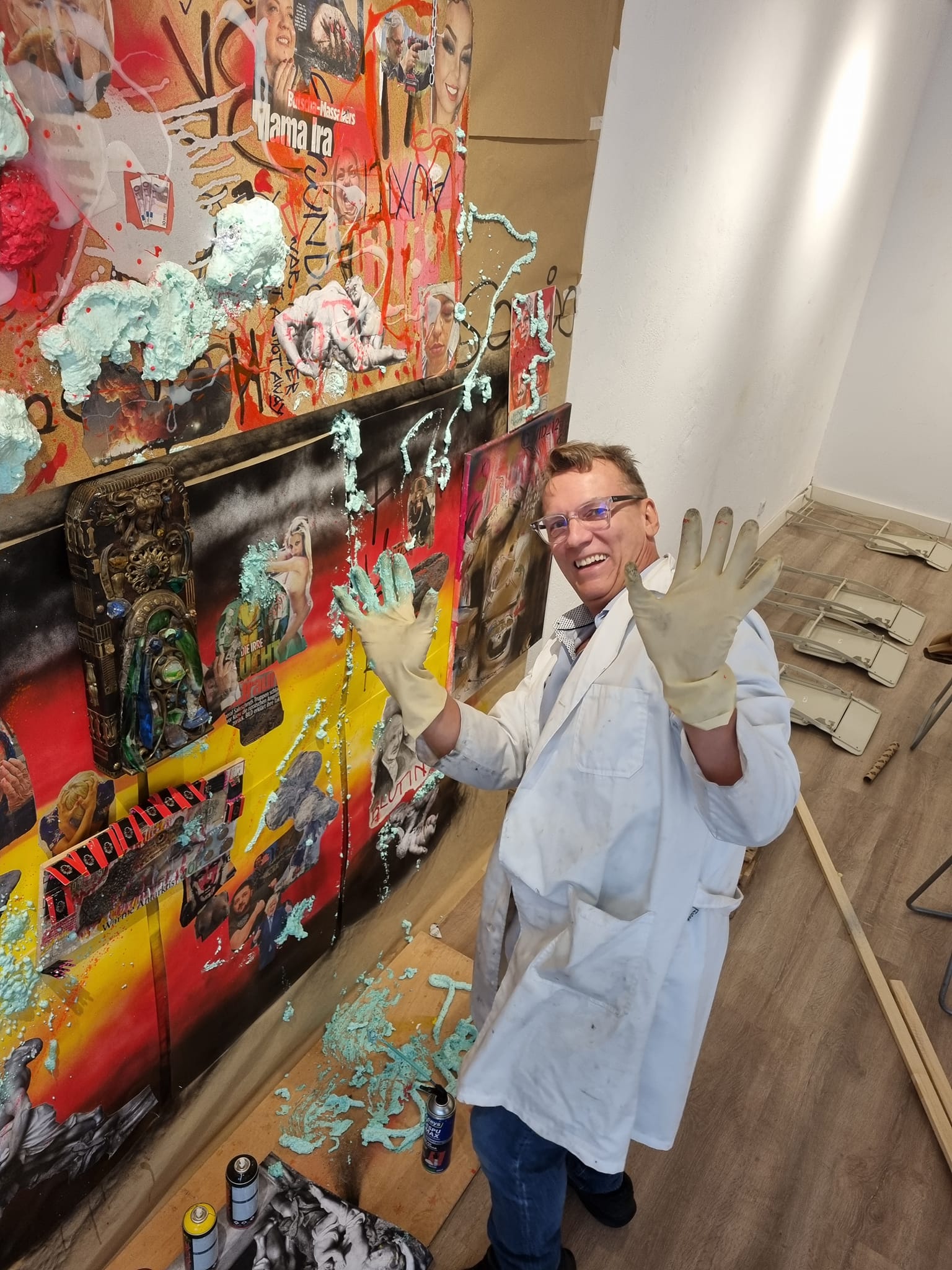
"Comic art". 120x80cm. Oil on canvas. 2022. WvP.
2. Affirm Your Intentions – 1 Minute
Now that you’ve grounded yourself, take a minute to set your intention for the day. Ask yourself, “What is my purpose today? How can I approach my tasks with calm and clarity?” These aren’t vague questions—they are your guiding principles for the hours ahead. Whether it’s to stay present, work with focus, or approach challenges with grace, write it down or say it aloud.
Why this works: Setting an intention aligns your actions with your values. By creating a mental map for your day, you clear the fog of uncertainty and step into your day with purpose. This is the cornerstone of Stoic thought—live according to your values, not your impulses.
"The happiness of your life depends on the quality of your thoughts." — Marcus Aurelius
3. Gratitude – 1 minute
Before you do anything else, take a moment to express gratitude. Reflect on three things you are thankful for. They can be as simple as the warmth of your bed, the opportunity to begin a new day, or the people who support you. This practice shifts your mind from what is lacking. It focuses on the enough in your life.
Why this works: Gratitude shifts your focus from stress to appreciation. Stoics taught that happiness comes from within. It's in how we perceive the world, not in external circumstances.
"A grateful mind is a great mind. It attracts great opportunities." — Plato
4. Physical Movement – 1 minute
Now, engage in some light movement. You don’t need a full workout—a simple stretch or a short walk around the room will do. This wakes up your body and prepares you for the day ahead.
Why this works: The Stoics knew the importance of maintaining a strong and healthy body. Our bodies affect our minds and emotions. They impact our clarity and resilience. A quick physical reset can boost circulation, release tension, and wake up your senses.
"It is not the things themselves that disturb us, but our opinions about them." — Epictetus
5. Focus on Your Breath – 1 Minute
Finally, spend one minute focusing on your breath. Close your eyes, inhale, and with each exhale, let go of any tension or stress you’re carrying. Let the breath be your anchor, bringing you back to the present moment, ready to face whatever comes your way.
Why this works: In moments of chaos, our breath is always there to guide us back to balance. The Stoics valued self-mastery. A focused breath is the best way to regain control in any situation. Deep breathing prepares your mind for challenges with calmness and clarity.
"He who is brave is free." — Seneca
In five minutes, you've grounded yourself, set intentions, and found gratitude. You've also moved your body and centered your mind. This simple routine aligns with Stoic wisdom. It empowers you to move through the day with intention, focus, and peace.
Remember, it’s not about achieving perfection or completing an elaborate routine. It’s about giving yourself a moment to pause, breathe, and set a purposeful tone for your day.
As you walk through your day, carry this stillness and focus with you. In the end, the secret to a fulfilling life isn’t about the big gestures—it’s in these small, intentional moments.
"Waste no more time arguing about what a good man should be. Be one." — Marcus Aurelius
viernes, 28 de febrero de 2025
Pantomime for orators
If you're looking for pantomimes specifically geared towards orators, they are performances that can help enhance vocal delivery, gestures, and physical storytelling while speaking. These pantomimes can be used to complement a spoken performance, improve non-verbal communication, and add dramatic flair to speeches or presentations.
Does speaking have to do with acting?
Here’s a list of pantomimes for orators that focus on gestures, physical presence, and expression to accompany speech:
1. Emphasizing a Key Point
- Description: Mime as if you’re holding something invisible in your hand and dramatically present it to the audience, as though it's a key object you're emphasizing. For example, imagine you are showing an important document, and your hand gestures should suggest the weight of its significance.
- Purpose: Helps orators engage the audience by adding physical emphasis to key points in their speech.
- Skills Developed: Gesture coordination, pacing, emphasis in speech.
2. Pointing to the Audience
- Description: Mime is the act of pointing to various people or sections of the audience, using your hand to guide attention while speaking. This can emphasize directness or address different groups as if calling them out.
- Purpose: Enhances interaction with the audience, allowing for a more immersive experience.
- Skills Developed: Audience engagement, physical connection to speech, and interaction.
3. Holding a Heavy Concept
- Description: Pretend to be holding a large, invisible object (like a boulder or weighty book), and as you speak about difficult topics, act as if the burden is getting heavier. Slowly lower the object when transitioning to lighter or more hopeful points.
- Purpose: Helps convey emotional shifts or thematic changes in your speech, using physical movement to mirror the weight of your words.
- Skills Developed: Emotional range, visualizing themes, subtle body language.
4. The Struggle to Speak
- Description: Mime the sensation of being unable to speak or of struggling to find the right words. Your body should reflect frustration or uncertainty as if trying to form thoughts but unable to do so.
- Purpose: Useful for orators delivering emotional speeches or expressing vulnerability. Shows the internal struggle to find or convey meaning.
- Skills Developed: Emotional expression, building suspense, vocal anticipation.
5. Gesturing for Support
- Description: Mime a gesture as if you’re seeking help from the audience — perhaps stretching your hands toward them or looking to them for support or validation.
- Purpose: Encourages connection with the audience, adding a sense of vulnerability or reliance, especially when addressing a difficult topic.
- Skills Developed: Audience rapport, non-verbal communication, emotional authenticity.
6. Holding a "Torch" of Truth
- Description: Pretend to be holding a metaphorical torch or flame (perhaps an important idea or truth). As you speak, lift the torch high and move around the stage to "spread the light," or lower it as you transition to a more somber or serious topic.
- Purpose: Enhances the metaphorical aspects of a speech, giving the orator a physical representation of their ideas.
- Skills Developed: Symbolic gesture, pacing, conveying abstract ideas visually.
7. Mimic a Past Conversation
- Description: Mime a past conversation, alternating between two "voices." Use body posture and gesture to differentiate the speakers, allowing the audience to see the interaction physically even if only one voice is heard.
- Purpose: Useful for orators who wish to bring a conversation or debate to life, demonstrating multiple viewpoints or conflicting perspectives.
- Skills Developed: Role-playing, voice variation, physical storytelling.
8. Opening a Book or Scroll
- Description: Mime the act of opening an ancient scroll or book and reading it aloud to the audience. The way you handle the “book” can be exaggerated: it might be heavy, delicate, or ancient, requiring special care. Use gestures to “read” it and emphasize the importance of the text.
- Purpose: Adds drama to speeches that involve referencing history, knowledge, or important ideas.
- Skills Developed: Gesture for storytelling, dramatizing quotes, integrating gesture with voice.
9. Pacing with a Thought
- Description: Mime the act of walking and thinking. As you pace across the stage, use hand gestures to show how you are working through an idea, and then "reach a conclusion" with a dramatic pause or gesture.
- Purpose: Helps build anticipation and conveys the internal process of thought. Great for reflective or philosophical speeches.
- Skills Developed: Timing, focus, movement coordination.
10. Shaping an Idea with Hands
- Description: Mime the act of shaping an invisible object, like molding clay or sculpting a masterpiece. As you speak, your hands form shapes in the air, symbolizing the creation or development of your ideas.
- Purpose: Excellent for speeches that describe the development of ideas, projects, or vision. Physicalizes abstract concepts.
- Skills Developed: Symbolism, creativity in gesture, visual storytelling.
11. The Call to Action
- Description: Gesture as though you are rallying the audience, urging them to act. Mime opening a door or handing something to an individual, emphasizing that the audience must take action now.
- Purpose: Perfect for motivational speeches, urging the audience to respond, act, or join in a cause.
- Skills Developed: Commanding presence, call-to-action communication, energizing the audience.
12. Reaching for the Stars
- Description: Mime the act of reaching up to the sky or stretching toward an impossible goal. This could be part of a speech about ambition, dreams, or striving for greatness.
- Purpose: To show aspiration, hope, or the pursuit of something higher. It complements visionary or inspirational themes.
- Skills Developed: Symbolic gesture, emotion through reach, aspirational movements.
13. Bridging the Gap
- Description: Mime the creation of a bridge, building it with your hands and body as if you're connecting two sides or uniting opposing ideas. Once the "bridge" is complete, gesture to it with pride.
- Purpose: Effective for speeches that seek to unite, reconcile, or build understanding between different viewpoints or groups.
- Skills Developed: Constructive gestures, unity representation, using physical space.
14. Dispersing a Cloud of Doubt
- Description: Mime the act of dispersing an invisible cloud that hangs over you, as if you're clearing away doubt, fear, or confusion to make way for clarity and truth.
- Purpose: Ideal for speeches focused on overcoming adversity or clearing up misconceptions.
- Skills Developed: Dramatic visualization, emotional release, overcoming obstacles.
These pantomimes allow the orator to physically embody their speech, helping them to deliver their words with greater emotion, intensity, and engagement. Incorporating physical gestures can make a speech more dynamic and memorable. Would you like tips on how to incorporate these pantomimes into a specific speech or presentation?
My way
And now, the end is near
And so I face the final curtain
My friend, I'll say it clear
I'll state my case, of which I'm certain
I've lived a life that's full
I traveled each and every highway
And more, much more than this, I did it my way
Regrets, I've had a few
But then again, too few to mention
I did what I had to do
And saw it through without exemption
I planned each charted course
Each careful step along the byway
And more, much more than this, I did it my way
Yes, there were times, I'm sure you knew
When I bit off more than I could chew
But through it all, when there was doubt
I ate it up and spit it out
I faced it all and I stood tall and did it my way
I've loved, I've laughed and cried
I've had my fill, my share of losing
And now, as tears subside
I find it all so amusing
To think I did all that
And may I say, not in a shy way
Oh, no, oh, no, not me, I did it my way
For what is a man, what has he got?
If not himself, then he has naught
To say the things he truly feels
And not the words of one who kneels
The record shows
I took the blows
And did it my way
Yes, it was my way